
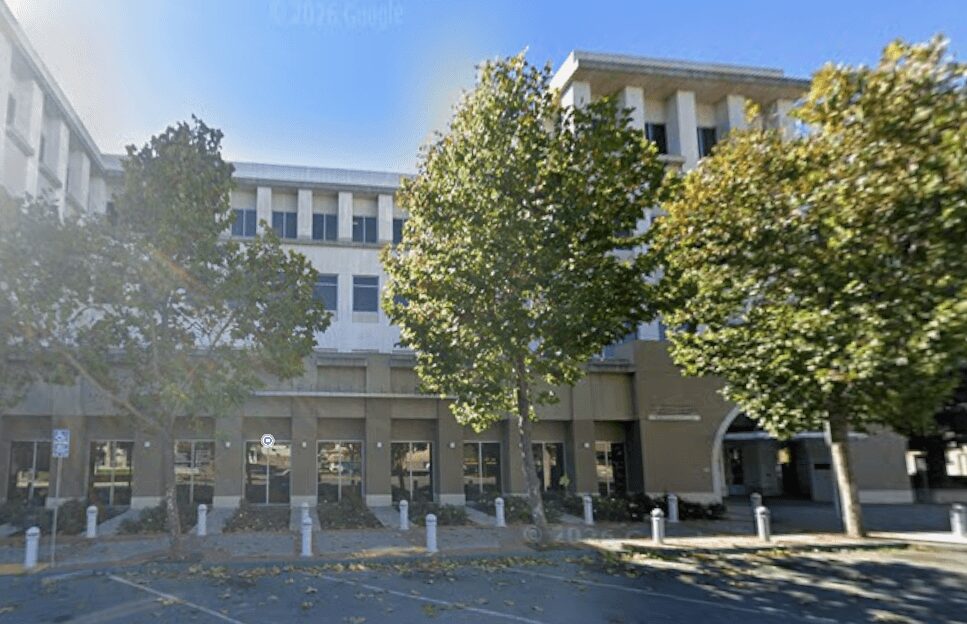
Where to File Your Paperwork in Santa Cruz County?
To start your divorce in Santa Cruz County, you need to turn in your paperwork to the Family Law Clerk’s Office (the administrative hub where records are processed). It is important to note that while some paperwork help (administrative services) is available at the main Santa Cruz Courthouse, the family law section (Family Law Division) is primarily centered at the Watsonville Courthouse. You must officially hand in (file) your legal documents to the clerk before any courtroom meetings with a judge (hearings) can be scheduled.
Address: Watsonville Courthouse, 1 Second Street, Room 300, Watsonville, CA 95076
Phone: (831) 786-7200 (Hours for phone assistance: 8:00 a.m. – 1:00 p.m.)
Business Hours: Monday–Friday, 8:00 a.m. – 3:00 p.m.
Where to File: Submit your divorce petition and related documents at the Clerk’s Office in the Watsonville Courthouse. Electronic filing (e-filing) is also available 24 hours a day via the court’s online portal.
📋
Divorce Requirements: Do You Qualify?
To file for divorce in Santa Cruz County, you must meet California’s specific residency requirements:
- State Rule: Either you or your spouse must have lived in California for at least six months.
- County Rule: Either you or your spouse must have lived in Santa Cruz County for at least three months before filing.
Using online divorce services like ours makes this process much easier. We help you navigate these local residency rules and ensure your paperwork is formatted correctly for the Santa Cruz County Superior Court.
📌
Filing for an Uncontested Divorce (When Both Spouses Agree)
An uncontested divorce is the fastest and least stressful way to end a marriage in California. If you and your spouse agree on all terms, you can avoid the “trial” phase of a divorce. In California, this process is governed by the Family Code, including new streamlined options like the Joint Petition (effective 2026), which allows couples to start the process together.
The process follows these key steps:
- File the Petition: You start by filing a Petition—Marriage/Domestic Partnership (Form FL-100) and a Summons. The standard filing fee in Santa Cruz County for 2026 is $435.
- Serve Your Spouse: Unless you file a Joint Petition, you must officially “serve” the papers. If they agree to the divorce, they can sign an Appearance, Stipulations, and Waivers form to move the case forward without a contest.
- Financial Disclosures: Both spouses must exchange “Declarations of Disclosure,” which are detailed lists of what you own and what you owe.
- The 6-Month Waiting Period: California law requires a mandatory six-month waiting period from the date the respondent is served before the judge can sign a final Judgment. You are not single until this period ends.
- Submit the Judgment: Once you have a written agreement (Marital Settlement Agreement) and the waiting period is met, you submit your Judgment (Form FL-180) for the judge’s signature. You usually do not need to appear in court.
Note: You can use the six-month waiting period to finalize your written property agreement. It is best to have this contract signed and ready early to ensure your house, cars, and bank accounts are divided exactly as you intended.
🗂️
Common Santa Cruz County Divorce Forms You Will Need
To complete your divorce, you will use a standardized set of California Judicial Council forms. While the forms are statewide, the way they are processed is specific to the Santa Cruz Superior Court.
The basic forms include:
- FL-100 (Petition): The document that starts the case.
- FL-110 (Summons): Informs your spouse of the case and the automatic restraining orders regarding property and children.
- FL-115 (Proof of Service): Confirms your spouse was legally notified.
- FL-141 (Declaration Regarding Service of Disclosure): Tells the court you have exchanged financial info with your spouse.
- FL-180 (Judgment): The final paper the judge signs to end the marriage.
If you have minor children, you will also need:
- FL-105 (UCCJEA Declaration): Notifies the court where the children have lived for the last five years.
- FL-341 (Child Custody and Visitation Order Attachment): Outlines your agreed-upon parenting schedule.
💳
Divorce Filing Fees and Costs
For 2026, the standard fee to file a divorce petition in Santa Cruz County is $435. If the respondent files a “Response,” they must also pay a $435 filing fee.
If you are filing a Joint Petition (available for many uncontested cases starting in 2026), the combined fee is $870. If you have a low income and cannot afford these fees, you may file a “Request to Waive Court Fees” (Form FW-001) to ask the court to process your case for free.
Start Divorce in 3 Simple Steps
Our service can complete the paperwork for your agreed-upon divorce, minimizing your stress and the risk of submitting the wrong forms.

Check Your Eligibility
Answer several simple questions on our platform to see if our service is suitable in your specific circumstances.

Fill out a Questionnaire
Complete a full online questionnaire, providing the details of your case so the system can select and fill in the right forms.

Print out the Papers
Download the completed documents from your account, print, sign, and notarize them to start the case with the local court.
- Court-Approved Divorce Packet 📂
We prepare all the forms for your uncontested divorce in Jefferson County. You won’t waste hours searching which papers you need. Everything comes complete and ready to file at the courthouse. - Forms Filled Automatically Based on Your Answers 📝
Our simple guided questionnaire fills out the forms for you. No confusing legal language or hours spent figuring out instructions – we make it easy. - Step-by-Step Filing Instructions 🛠️
Along with your forms, you’ll get simple instructions that show how to file with the court. This makes the process easier and less stressful.